 Andrew Noland, COO of Atlas Forensics, discussed common cybersecurity issues and how businesses can prevent them. Plus, two new members were inducted.
The Rotary Club of Chickasha met Thursday, July 20, 2023. Rotarian Mitch Williams led the club in singing "Summertime".
Vice President Clark Southard presided over the meeting. He informed members that the club would be helping to staff the Festival of Light this year. Members interested in volunteering should contact Jim directly.
Two new members were inducted: Troy Avant and Trey Adams, both of Liberty National Bank. They were sponsored by Gerron Smith.
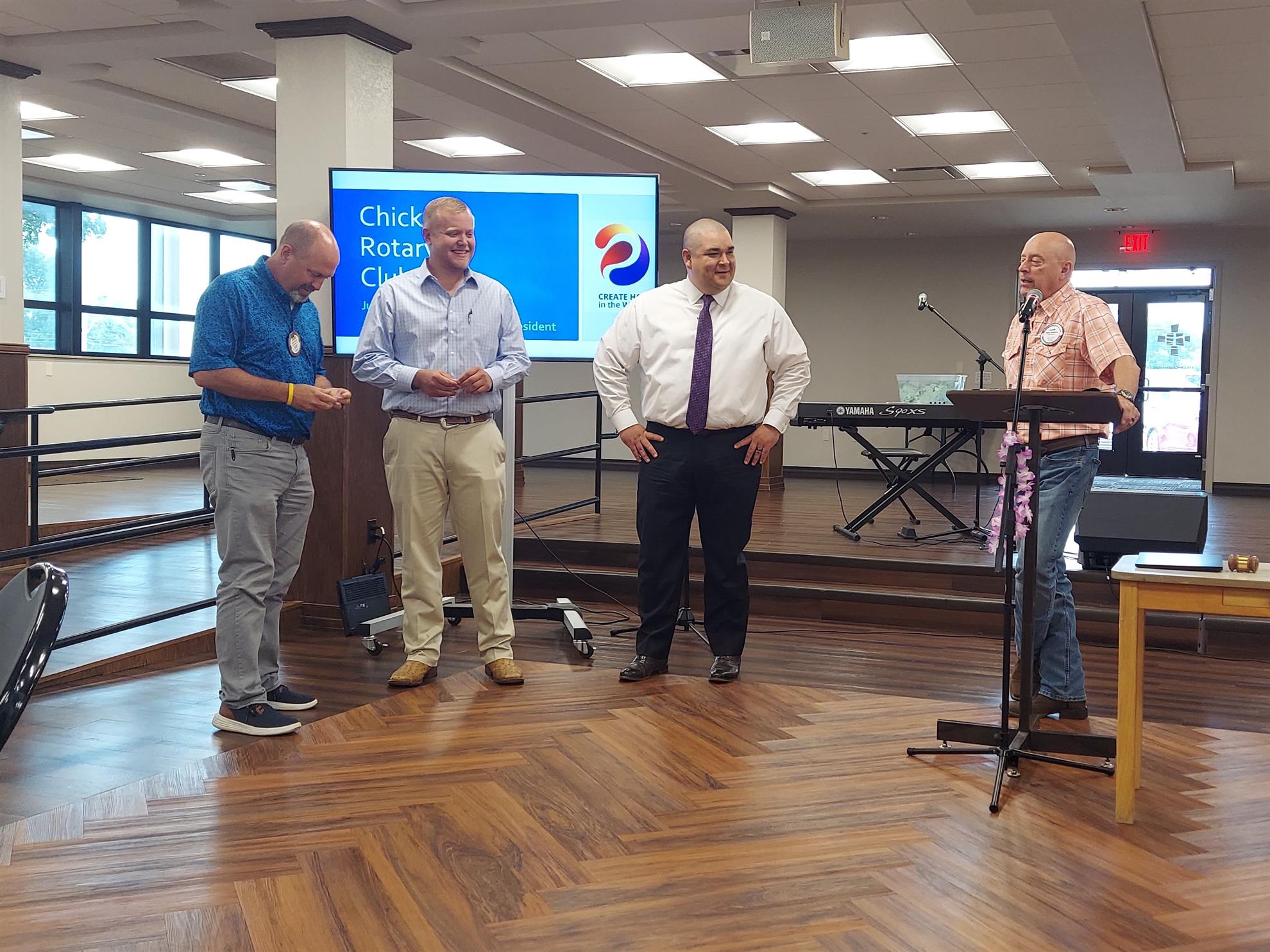
From left: Chris Mosley, standing in for sponsor Gerron Smith, prepares to pin the Rotary emblem on Trey Adams
and Troy Avant, after being welcomed into Rotary by Vice President Clark Southard.
and Troy Avant, after being welcomed into Rotary by Vice President Clark Southard.
As Rotarian of the Day, Cooper Mosley introduced the speaker, Andrew Noland. Noland is the chief operating officer of Alias Forensics, a cybersecurity business based in Yukon but serving across the state. They provide both proactive (risk analysis) and reactive (breach recovery) services to industries and governments.
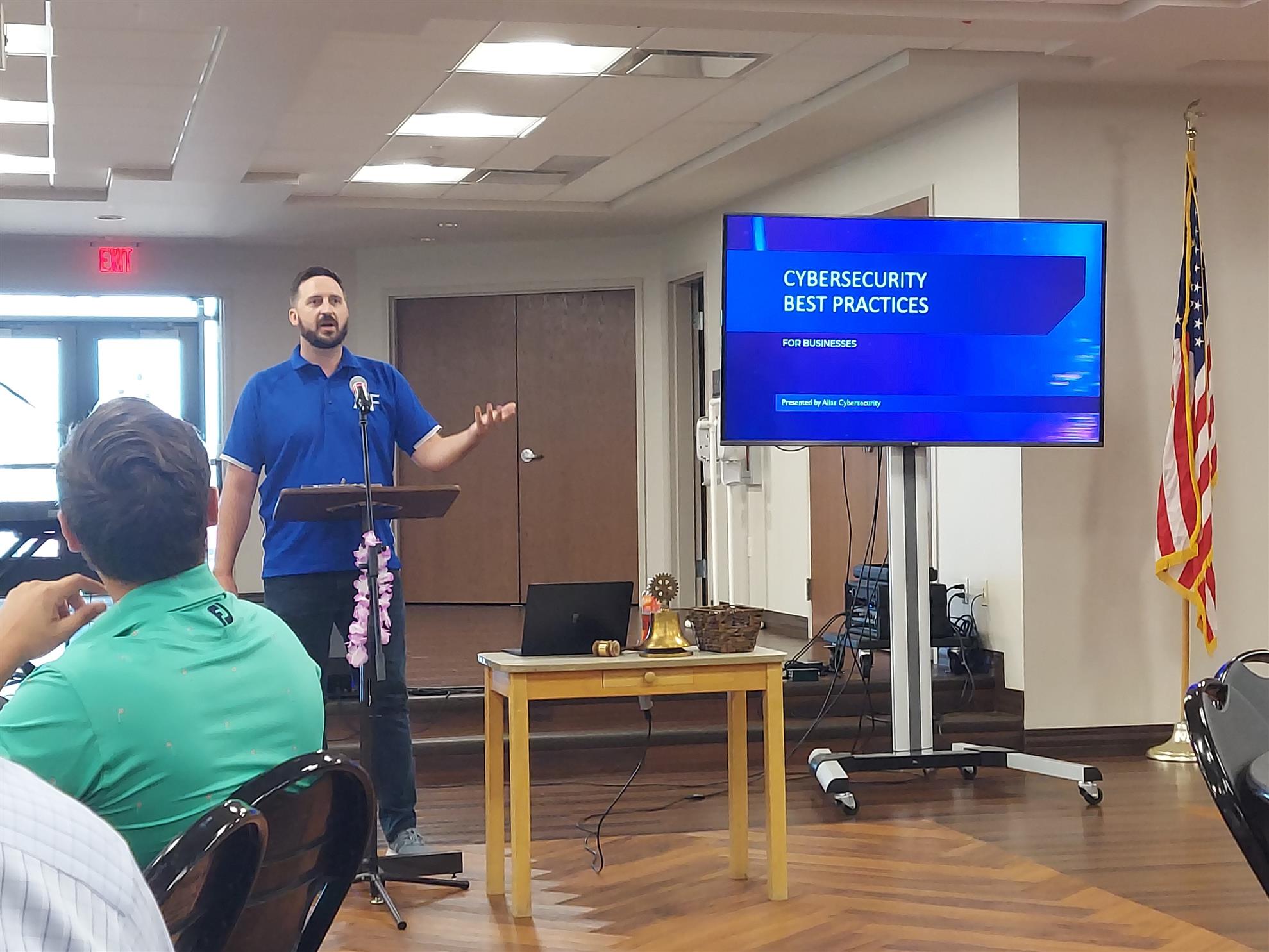
Noland went over best practices for business cybersecurity. At a basic level, creating strong account passwords is necessary—longer passwords with a mixture of cases, numbers, letters, and symbols are best. He advised against using the same password across multiple accounts, but if you do, and one account password is leaked, all the other accounts should also have their password changed. Two-factor authentication is also useful—requiring you to confirm on another device before logging you in.
Noland also recommended that businesses explore GDR and SIEM solutions that suited their needs, and to keep software up-to-date with the latest security patches. But the critical part of cybersecurity is educating your users. All employees should have enough basic knowledge to spot suspicious emails, websites, and programs that spoof legitimate services. Most breaches, he said, are not necessarily negligent, but still very preventable.
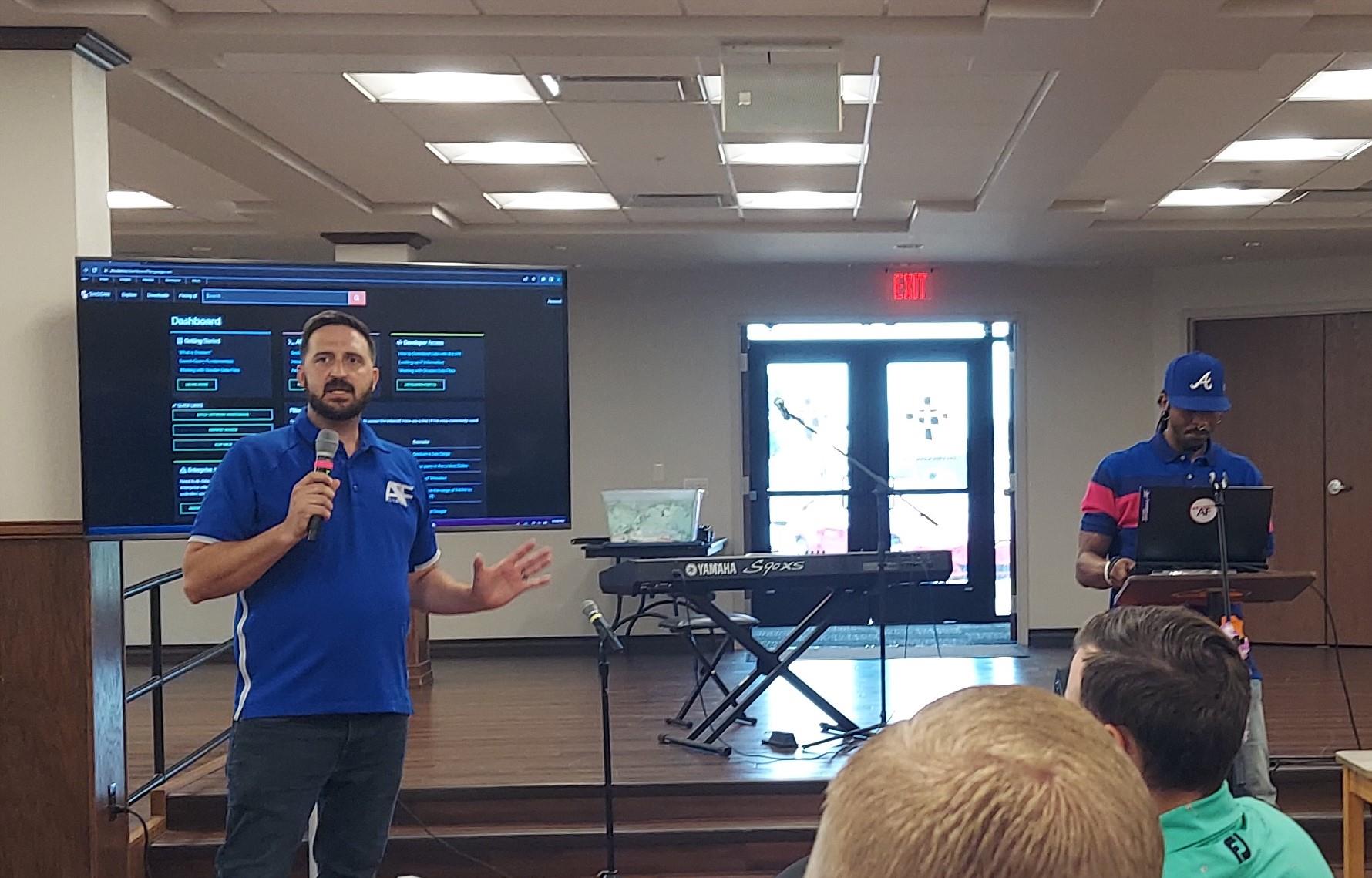
Andrew Noland and SOC Analyst Keelan Knox demonstrate shodan.io, a tool that reveals vulnerable systems
that are using open or default internet ports.
Noland summarized with three basic steps that businesses can take for security. First, have a third party perform a risk assessment ("external pin test") on their network and infrastructure. Second, user awareness training for employees. Third, traditional antivirus programs such as McAfee are no longer sufficient protection. A next-generation security product is needed.
Lunch was provided by Rock Island Grill.